

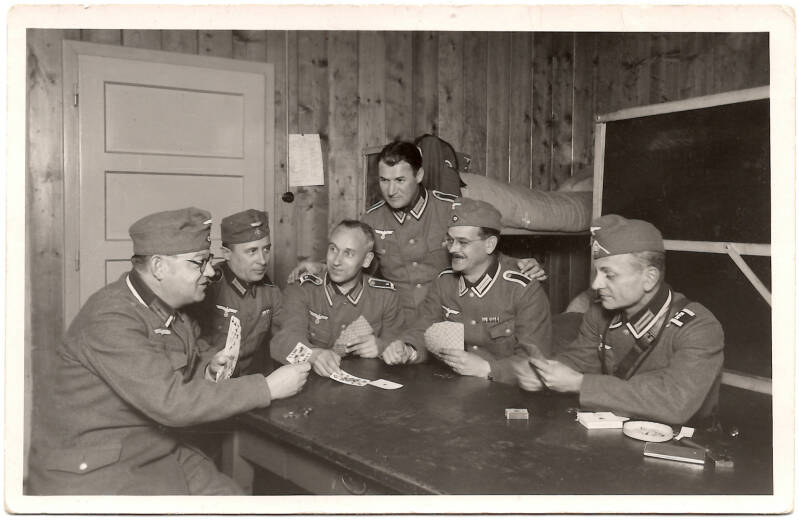
Having a nice time playing a game together, before they continue with the war.
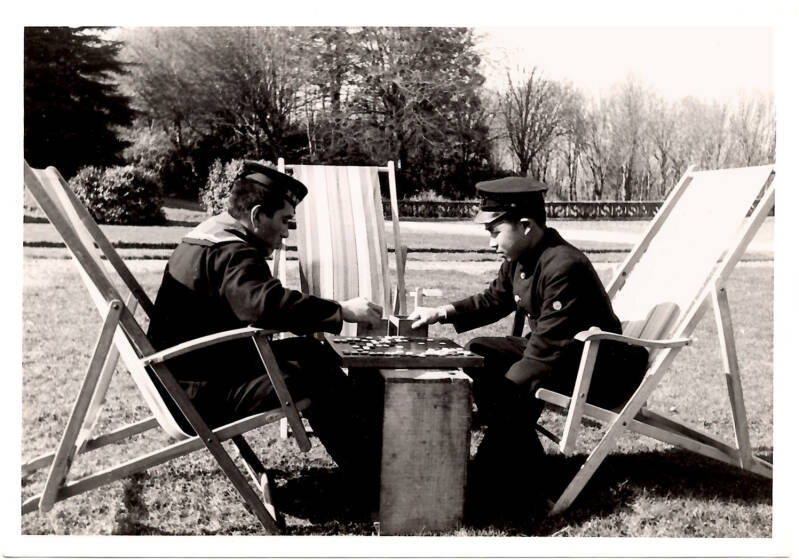
Just relaxing a bit after they sank a ship yesterday.
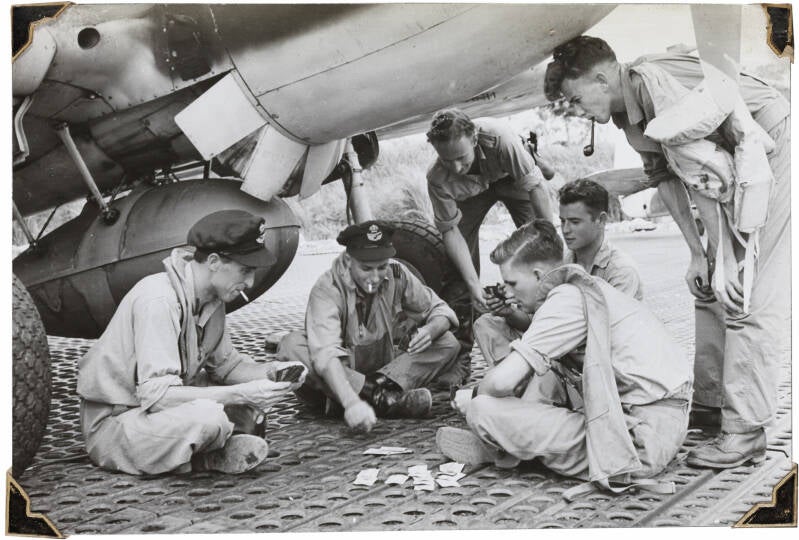
Just enough time for a game of cards before they start bombing again.
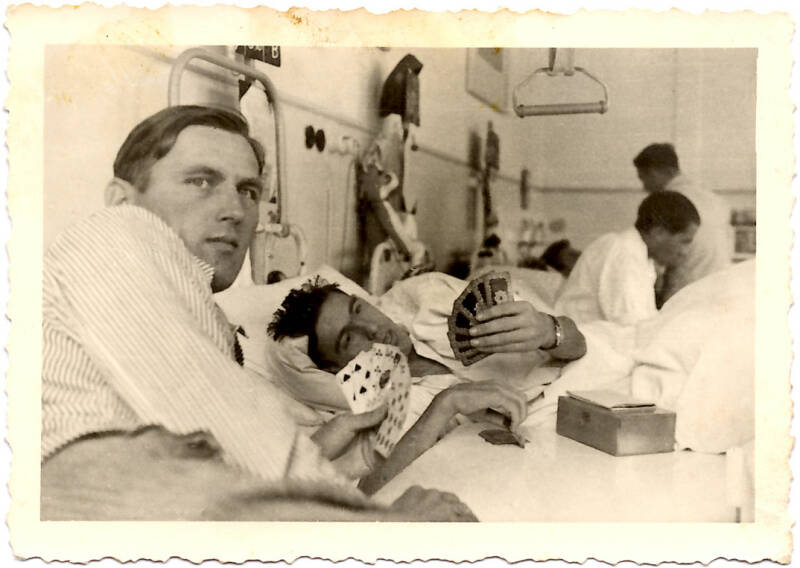
He has to miss a leg, but during a game he might forget that.
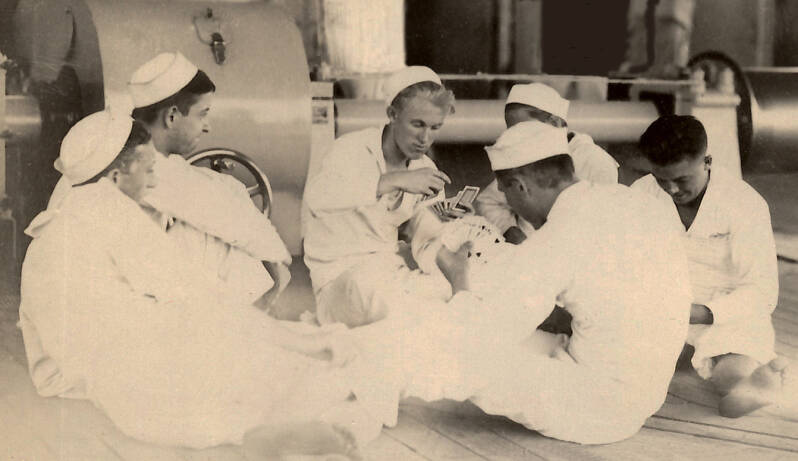
Pay your poker debt immediately, because tomorrow you might have lost for good.
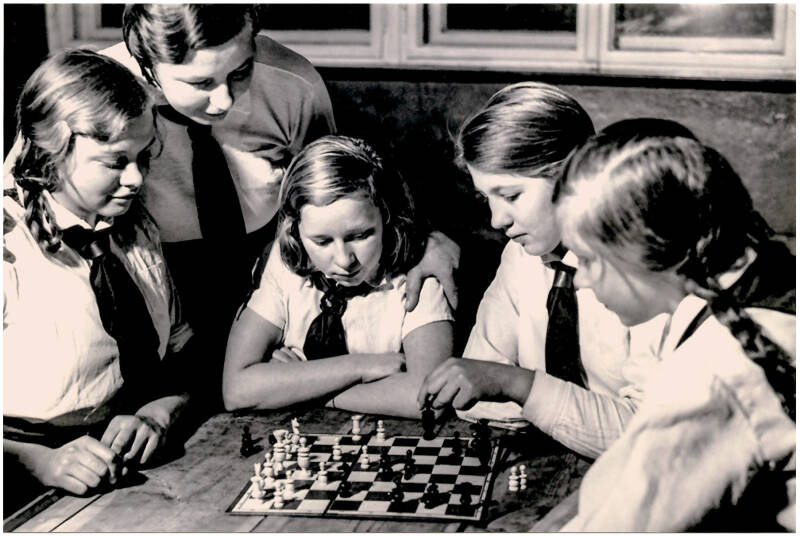
If you wanted to become a good Nazi mother, you also had to be able to play chess.
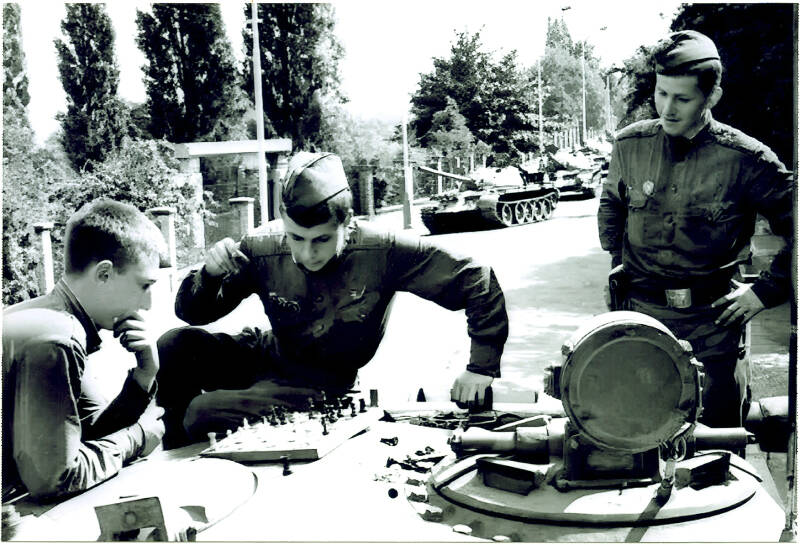
The Russian youth: even during a break in the fight, still eager to win.
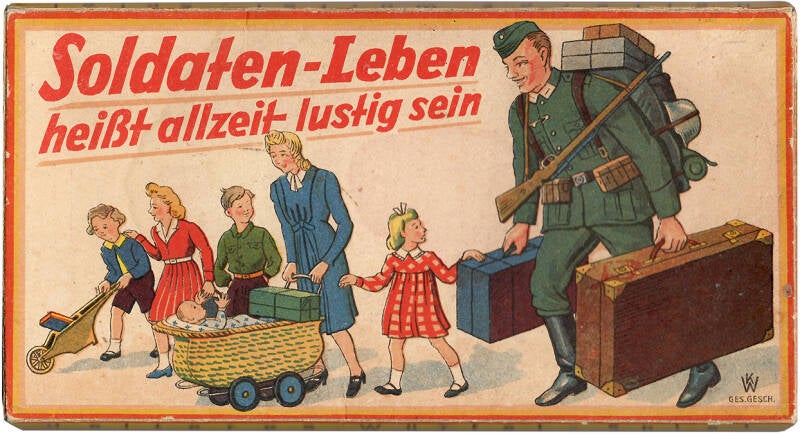
There was a lot of fighting. And playing.
With 50 to 70 million deaths, the Second World War was not only terrible, but it was also the war in which the most games were played. That is not as strange as it seems. In the countries involved, people lived in fear and uncertainty. Who is going to win the war? Will we survive? Will we still have a home tomorrow? And something to eat?
Millions of people -civilians, soldiers, patients, prisoners, and those in hiding- tried to forget stress by playing a game. Together with others or alone. A game was quick to organize, anywhere, both indoors and outdoors. It was also an easy way to combat boredom.
Game manufacturers saw a market for this. The war was the talk of the day, so they devised games with the war as their theme. Naturally, they followed their government's propaganda, which had to be kept on good terms.
In the run-up to the war, this was popularized in games—and also in jigsaw puzzles. By playing, you could become a hero yourself. But when the war really began in 1939 and claimed many victims, the manufacturers shifted the focus to games about other, cheerful subjects.
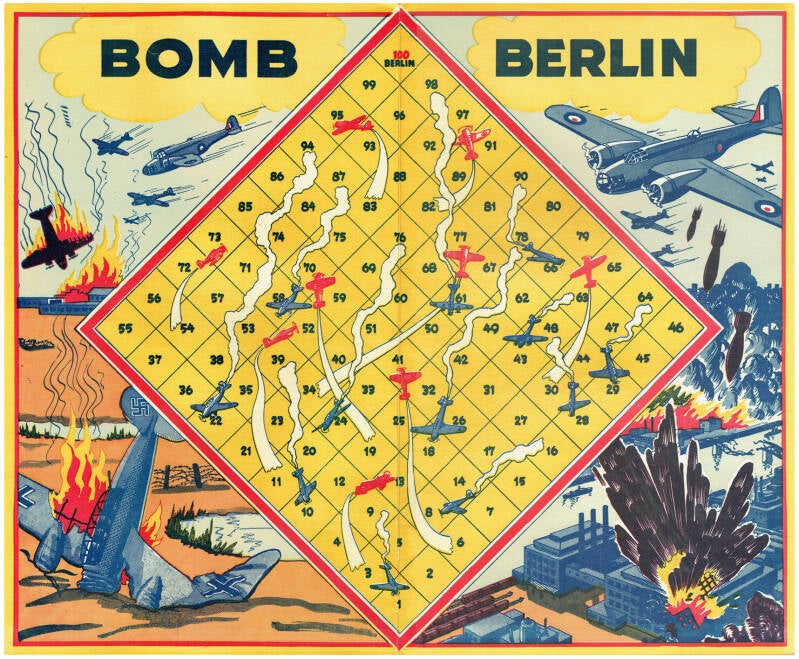
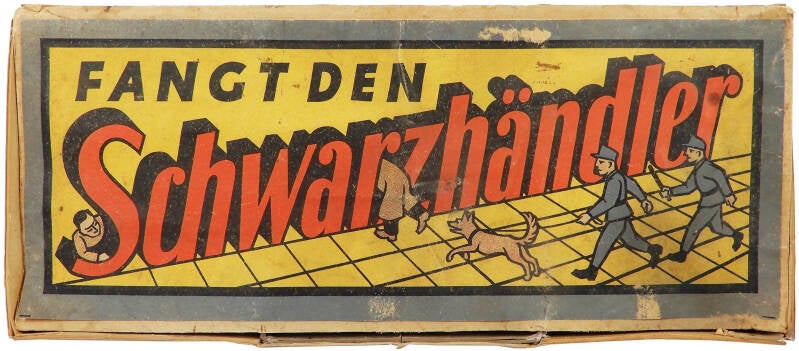
Those who could not afford to buy games, such as prisoners and those in hiding, but also ordinary citizens, started making them themselves. With the limited resources available. We can see just how great the need for games was by the homemade games made by prisoners in German and Japanese camps, where playing was forbidden. People risked their lives to be able to play chess, checkers, or cards.
These cards were made by a Czech prisoner in Buchenwald camp and, by the looks of it, were used extensively. Lacking cardboard, he sought out empty cigarette cases from guards.
Games and puzzles reflect not only the political but also the economic and social developments of that time. For example, the scarcity that arose as a result of the war. A shortage of food, but also of materials. This is evident in the games and puzzles, which became smaller and of lower quality. In order to dedicate as much energy and manpower as possible to the war effort, the game factories were even closed at a certain point.

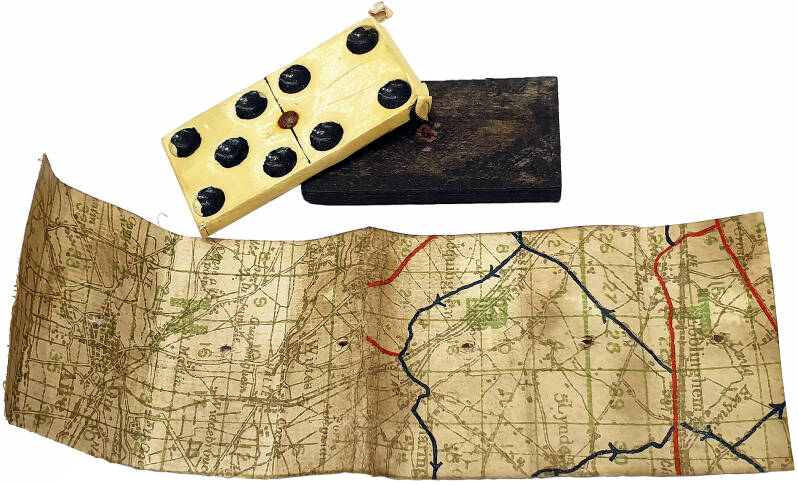
It is little known that organizations also used games to help prisoners of war escape. In German camps, prisoners of war received seemingly ordinary games, such as playing cards, Monopoly, checkers, and chess, in which tools and information were hidden to help them get out of their camp.
This is a fake domino brick in which a folded part of a map with escape routes was hidden.
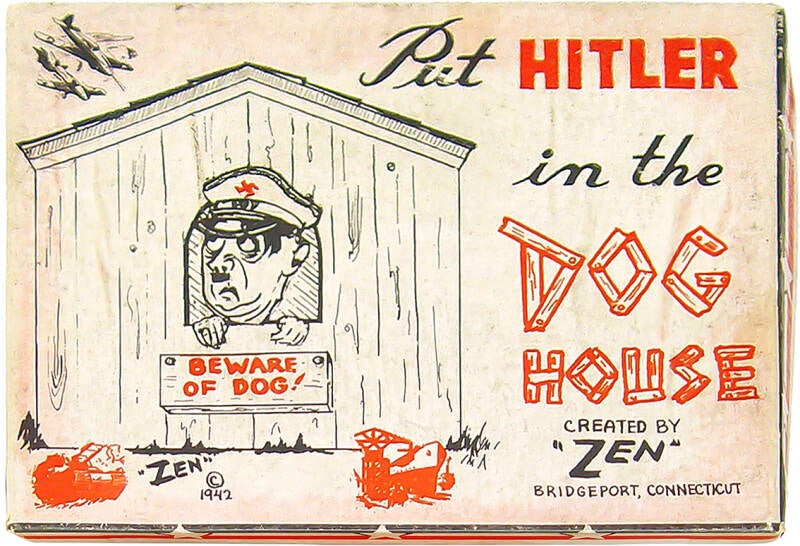
During and especially at the end of the war, we see games and puzzles used to ridicule the enemies.
Naturally, the liberation of the occupied countries is also celebrated with games and puzzles. Business is business, right?
Is there a museum about games and puzzles from the WWII period?
In the historiography of the war, games and puzzles receive hardly any attention. But that is about to change. Work is underway on a special museum: WW2GamesMuseum. A museum you don't have to travel to, because you can view and read everything on your computer. Whenever you want. In the language of your choice. Free and without advertising.
With a smart system, you can quickly find what you want to see and know. Every object is professionally photographed and displayed on your screen, down to the smallest details. The information covers the object, how it was played, where and when it was made, the historical background of the type of game, and what was happening in the world when the game was produced.
Realizing such a museum is a lot of work. Volunteer work, for which the Dutch foundation WW2GamesMuseum was established.
WW2GamesMuseum.online Foundation
The initiative for the museum comes from the Dutchman Gejus van Diggele, who has been collecting and researching all forms of games and puzzles from the WW2 period (1920–1950) since 1992. His database contains nearly 6,000 items from 54 countries involved in the war and continues to grow weekly.
After 37 physical exhibitions in European museums, Gejus now wants to make his collection and knowledge permanently accessible to everyone. Simply via the internet, so that you can view it at any time and in any place.
WW2GamesMuseum.online is a non-profit project run by volunteers with a professional approach. The legal form is a Dutch foundation, established on February 11, 2026. Registered with the Chamber of Commerce under number 99773864.
Board:
Gejus van Diggele, Chairman
Ed Hoogerbrug, Treasurer
Jelle Verwerda, Secretary
Address:
Rijndijk 71, 2394AD Hazerswoude, The Netherlands
Would you like to be kept informed about the development and opening date of the museum, without obligation?
Send an email with your name and country to gejusvd@xs4all.nl